Every generation has its gatekeepers. In medicine, law, architecture — the people who codify what a discipline is and what it could become. The bar world is no different. For every thousand bartenders who have poured a Martini, a tiny handful have stopped mid-pour and asked: why is it done this way? What would happen if it weren't?
The ten figures below are not simply talented mixers of drinks. They are the people who changed what a bar means — who redefined the relationship between bartender and guest, who rescued dead techniques, who inspired movements that now span continents. Some are legends of the Victorian era; others built bars that became the DNA of the modern cocktail renaissance. All of them changed something fundamental about how the world drinks.
"The best bartender I ever worked for never told me what to do — he showed me what was possible."
— Sam Ross, co-founder of Attaboy, New York
01. Jerry Thomas — The Professor Who Made Bartending a Craft
Before Jerry Thomas published How to Mix Drinks, or The Bon Vivant's Companion in 1862, bartending had no canon. Recipes were guarded secrets, passed mouth to ear across mahogany counters. Thomas changed that with a single act of radical generosity: he wrote it all down. His book was the first bartending manual ever published in the United States, codifying everything from the Julep to the Flip, complete with method, ratios, and context. The Blue Blazer — his signature flamed whisky cocktail — was pure theatre, poured in blazing arcs between silver mugs at his bar at 622 Broadway. Thomas understood that the bar was a stage and the bartender was the star. Every "celebrity bartender" alive today is working in his shadow.
02. Harry Craddock — The Savoy Standard-Bearer
An American bartender who fled Prohibition and landed behind the stick at the Savoy's American Bar, Harry Craddock became the definitive voice of the Jazz Age cocktail. His 1930 Savoy Cocktail Book contains 750 recipes and remains in print today — one of the most referenced volumes in any working bartender's library. Craddock did not simply collect recipes; he standardised technique in an era when precision was far from universal. His entry for the Dry Martini — "stir well with cracked ice and strain into a cocktail glass" — stripped away century-old ambiguity with a single sentence. The American Bar at the Savoy, which Craddock helped define, continues to inspire a generation of bartenders the world over.
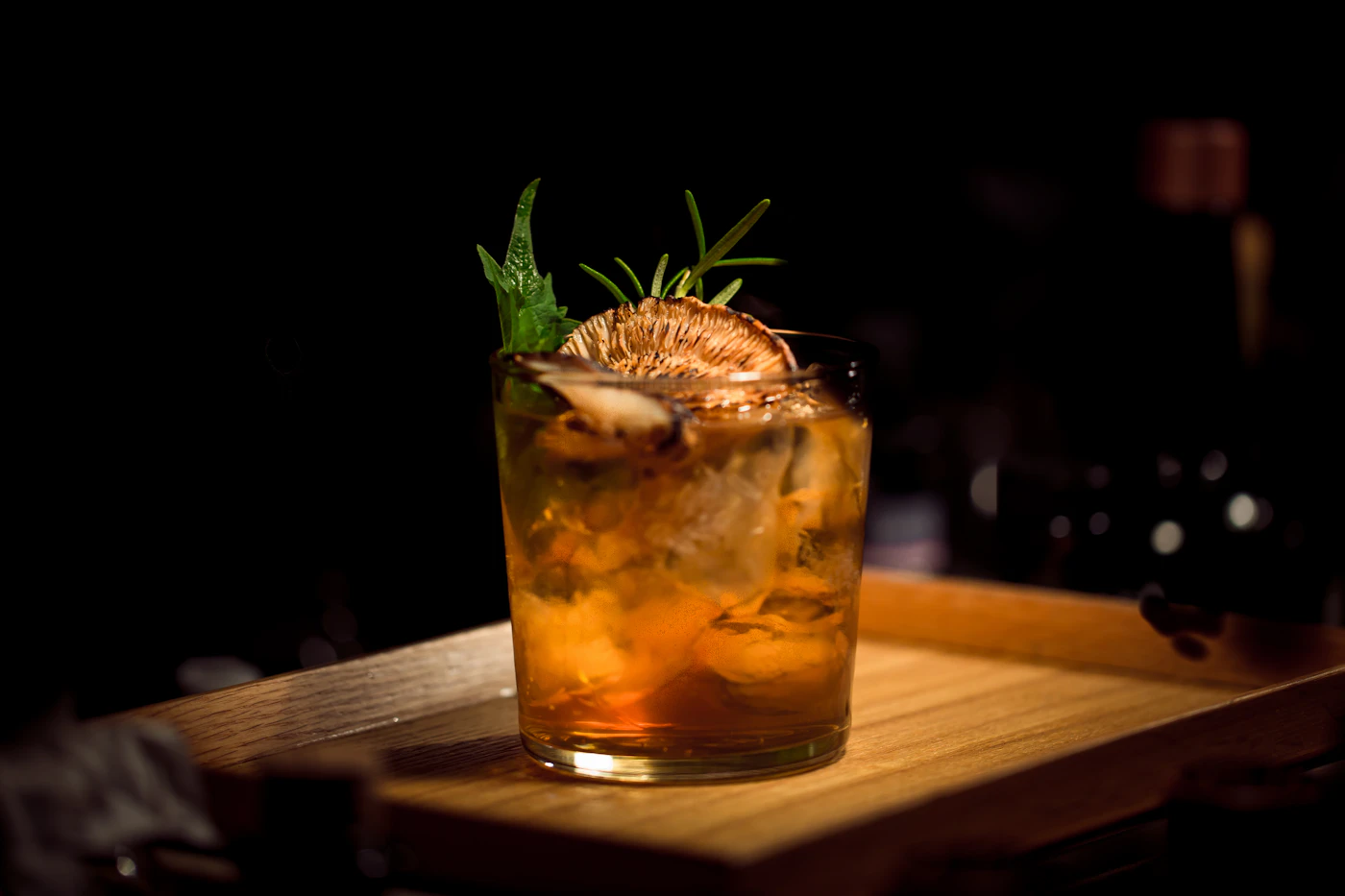
The craft of the classic cocktail — measured, deliberate, timeless.
03. Dale DeGroff — King Cocktail and the American Renaissance
If there is a single person responsible for the American cocktail renaissance that began in the 1980s, it is Dale DeGroff. At the Rainbow Room atop 30 Rockefeller Plaza, DeGroff dragged American bartending out of its sour-mix-and-speed-rail nadir by insisting on fresh juice, proper technique, and the kind of hospitality that had been lost since Prohibition. He trained a generation of bartenders — including Audrey Saunders, Julie Reiner, and Sasha Petraske — who went on to open the bars that define New York's cocktail identity. His 2002 book The Craft of the Cocktail was the manifesto the industry needed. Without DeGroff, there is no PDT, no Death & Company, no Milk and Honey.
04. Dick Bradsell — The Man Who Made London Cool
Dick Bradsell is the reason London became a serious cocktail city. Working through a series of bar residencies from Soho to Notting Hill, Bradsell combined impeccable classical training with a rock-and-roll sensibility that spoke directly to the British cultural moment of the late 1980s. He invented the Espresso Martini — originally called the Vodka Espresso — in 1983 at the Soho Brasserie, reportedly after a young model asked for something that would "wake me up and then f*** me up." The drink went on to become one of the most globally ordered cocktails of the 21st century. But Bradsell's true legacy is the atmosphere of creative permission he gave to an entire generation of London bartenders — the sense that the bar was a place of artistry, not just service.
"Dick taught us that you don't need a rule book — you need a palate and a point of view."
— Nick Strangeway, London bartender and spirits consultant
05. Sasha Petraske — The Godfather of the Speakeasy Revival
On New Year's Eve 1999, Sasha Petraske opened a tiny, unlisted bar on the Lower East Side of Manhattan. The door had no sign. The phone number was known only to initiates. There were rules — no name-dropping, no hooting, stand for a lady. Milk and Honey was not a concept bar; it was an act of philosophy. Petraske believed that great cocktails required the right environment, and that the right environment required genuine respect — between the bartender and the guest, and between the guests themselves. From that single room sprang Attaboy, Little Branch, Dutch Kills, Weather Up, and dozens of other bars around the world. Petraske died in 2015 at 42. The industry mourned one of its few true originals.
06. Salvatore Calabrese — The Maestro of Ceremony
If Bradsell gave London its edge, Salvatore Calabrese gave it its soul. At Dukes Hotel in St James's — now a destination in its own right — Calabrese elevated the Martini to its logical extreme: a ceremony conducted tableside, using spirits stored in the freezer, poured without ice, consumed in three careful sips. His approach was less about innovation than about depth — the deep understanding of spirits history, guest psychology, and the physics of a perfectly cold glass. Calabrese's book Classic Cocktails (1997) was required reading for a decade of London bartenders. He also holds the Guinness World Record for the oldest cocktail ever mixed, using a 1778 Kummel and cognac dating from 1858. The London cocktail scene without Calabrese would be a different place entirely.
Technique, intention, and timing — the bartender's triumvirate.
07. Sam Ross — The Recipe Writer's Recipe Writer
Sam Ross is one of the most imitated bartenders alive today — largely because he has given the world two of the most perfectly constructed modern cocktails ever made. The Paper Plane, which he created in 2007 as a riff on the Last Word — equal parts Aperol, Amaro Nonino, bourbon, and lemon juice — has appeared on more menus in more countries than almost any drink invented in the past 30 years. The Penicillin, his earlier creation, essentially invented the genre of smoky-sweet-citrus cocktails that now fills a section of every craft cocktail menu on earth. At Attaboy, the bar he co-founded with Michael McIlroy on the site of Milk and Honey, Ross continues to operate at the highest level. His legacy is the proof that craft and commercial viability are not in opposition — a perfectly balanced drink will always find its audience.
08. Jack McGarry — The Operator Who Changed the Game
Jack McGarry's contribution to the bar world is not one extraordinary cocktail — it is the proof that a high-volume, award-winning bar can maintain obsessive quality at scale. At The Dead Rabbit, which he built with partner Sean Muldoon at 30 Water Street in the Financial District, McGarry created a machine: 600 covers a night, a seasonal cocktail menu illustrated like a Victorian storybook, a staff training programme so thorough it has been adopted by other bars around the world. The Dead Rabbit won World's Best Bar in 2016 and 2017 — the first back-to-back winner in the history of the award. But McGarry's more lasting contribution may be to the idea of the bartender-as-operator: someone who thinks about systems, culture, and scalability as carefully as flavour.
09. Hidetsugu Ueno — The Japanese Master Who Rewired Technique
Western bartenders discovered Japanese technique gradually — through visiting bartenders, through awards, through the arrival of hand-cut ice on drink menus from Manhattan to Melbourne. But for the community that understood what they were looking at, the source was clear: it was bars like Ueno's Bar High Five in Ginza, Tokyo, where the hard stir was elevated to a meditative practice, where every movement behind the bar carried intentional weight. Ueno's approach — slow, controlled stirring with precise dilution, ice carved to fit each specific glass, a curtness toward excess — provided Western bartenders with a technical vocabulary they hadn't known they were missing. The influence of Japanese bartending on the global scene today flows substantially through his work.
10. Ryan Chetiyawardana — The Scientist Who Made Bars Think
Ryan Chetiyawardana is the bartender who made the industry uncomfortable — and then made it grateful. At White Lyan in Hoxton, he opened the world's first bar with no ice, no citrus, and no perishables: every drink was pre-batched, shelf-stable, and built around the chemistry of dilution and oxidation. It was a provocation as much as a bar. Dandelyan followed, a more approachable distillation of the same ideas filtered through a sustainable cocktail menu that won World's Best Bar in 2018. Then Lyaness, with its ingredient-led approach to flavour taxonomy. Chetiyawardana thinks about cocktails the way a chef thinks about cuisine — systematically, philosophically, with an eye on where the discipline is going rather than where it has been. The awards he has accumulated are secondary to the questions he has forced the industry to ask about what a cocktail can be.
"The most transformative bartenders didn't just change what was in the glass. They changed what the glass meant."
— Tom Callahan, barsforKings
The Thread That Connects Them
Look across this list and a pattern emerges. Jerry Thomas gave bartending a literature. Harry Craddock gave it a grammar. Dale DeGroff gave it a revival. Dick Bradsell gave it a counter-culture. Sasha Petraske gave it a philosophy. Calabrese gave it a ceremony. Sam Ross gave it a template. Jack McGarry gave it a business model. Ueno gave it a discipline. Chetiyawardana gave it a future.
None of them worked in isolation. The bar world is a conversation across time — each generation drinking with the ones that came before, absorbing what was useful and discarding what wasn't. The bartenders on this list changed the terms of that conversation. They are why, when you sit down at a well-run bar tonight — whether in New York, London, Tokyo, or Barcelona — the person behind the stick approaches your drink the way they do.
That's not a small thing. That's the whole thing.


